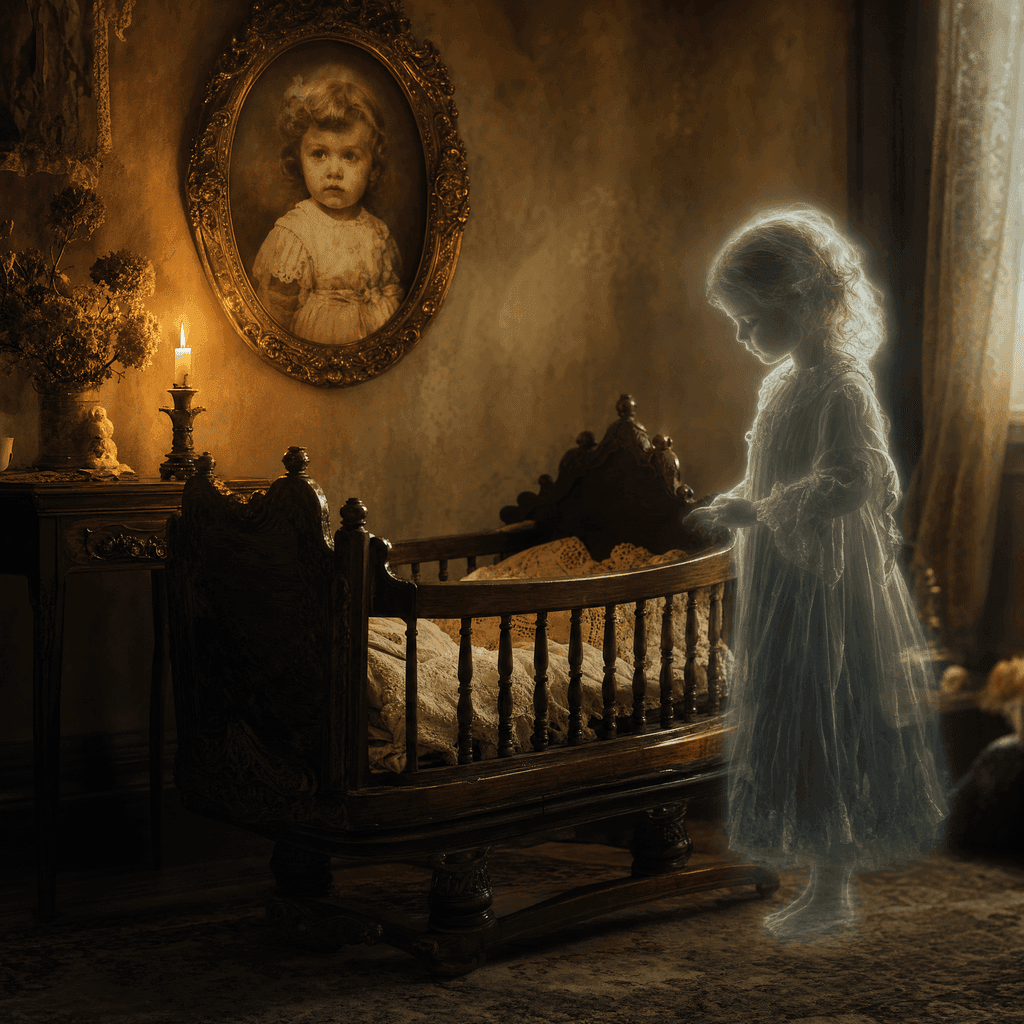
Key Takeaway: The replacement child is born to fill the void left by unresolved grief. Unconsciously charged with bringing a deceased person back to life, they struggle to build an identity of their own. Psychogenealogy makes it possible to recognize this invisible burden, and break free from it.
You've always felt like you weren't quite living your own life. As if a diffuse expectation rested on your shoulders, one no one ever put into words. Perhaps you were born shortly after the death of a brother, a sister, or another child your parents were still grieving.
If so, you may be carrying what psychogenealogy calls replacement child syndrome.
This is not an illness. It is a silent inheritance, the legacy of grief your parents were unable to process, and which your very existence was unconsciously assigned to repair.
What Is Replacement Child Syndrome?
A replacement child is a child conceived, consciously or not, to fill the void left by the death of a previous child, or sometimes a deeply mourned close relative. This child is born into an atmosphere of unprocessed grief, where the absent one still occupies all the space. The replacement child grows up in the shadow of someone who died.
The concept of the "recumbent effigy syndrome" (le syndrome du gisant) was popularized by psychogenealogist Salomon Sellam. It describes a child conceived too soon after a loss, while the parents are still overwhelmed by sorrow. The young child then grows up in the shadow of the dead, as if lying on the effigy of an invisible tomb.
This child is not awaited for who they are. They are awaited in place of someone else. And that nuance changes everything: they become the substitute for a deceased person, burdened with an impossible mission: to bring back the one who is gone.
The Origins: Unresolved Grief That Is Passed Down
To understand this syndrome, we must grasp how a parent's unprocessed grief is transmitted to the next child after a death.
When a parent loses a child (through a miscarriage, perinatal death, sudden infant death, an accident, or illness) and that grief remains blocked and unprocessed, the pain does not disappear. The unfinished mourning lodges itself in the family unconscious.
Psychoanalysts Nicolas Abraham and Maria Torok theorized this mechanism through the notions of the crypt and the phantom. The crypt is the psychic tomb where the parent encloses the unspeakable pain of the deceased. The phantom is what is transmitted to the next child: not a memory, but a secret, a void, a presence-absence that haunts the psyche without ever being spoken.
The replacement child thus inherits a dead person they never knew, a sorrow that is not their own, and an expectation they can never fulfill. This transgenerational mechanism connects directly to the weight of transgenerational trauma.
How Do You Know If You Are a Replacement Child?
Certain signs come up frequently among those affected by this syndrome. None is proof on its own, but their accumulation is telling:
- Carrying the name of the deceased, or a close variant: a classic and often unsettling clue.
- A diffuse sense of not having the right to exist for yourself, as if your place were borrowed.
- Difficulty building your own identity, knowing what you truly want, who you are.
- Guilt about being alive, sometimes linked to dark thoughts or a sense of debt.
- Anxiety or depression, a long-standing melancholy with no apparent cause.
- The feeling of being expected on ground that isn't yours, of having to fulfill dreams that don't belong to you.
- A relationship with parents marked by idealization of the deceased, or by constant silent comparison.
Many replacement children describe a childhood spent "in the shadow," beside loving but absent parents whose gaze was turned toward someone other than themselves.
Famous Examples
History and culture offer striking examples of this syndrome. Salvador Dalí is perhaps the most famous: born nine months after the death of his older brother, also named Salvador, the painter said all his life that he had struggled to prove he was not his dead brother. Vincent van Gogh was also born exactly one year after a first Vincent, stillborn.
These lives illustrate how powerfully the weight of someone who died can shape (sometimes into genius, often into suffering) the identity of a replacement child.
The Consequences for the Sense of Self
Living as the substitute for someone who died has profound psychological consequences. The replacement child builds their identity not from themselves, but in reaction to an absence.
This can manifest as:
- Fragile self-esteem, rooted in the feeling of never measuring up to the idealized image of the dead.
- A persistent impostor syndrome: succeeding without ever feeling legitimate.
- Attachment difficulties, from an unconscious fear of being loved "in place of" someone else.
- A tendency toward repair: caring for others, rescuing, consoling, at one's own expense.
- Sometimes, conversely, a rebellion against this assignment, driving the person to do everything to stand apart.
Recognizing these effects does not mean locking yourself into a destiny. On the contrary, it is the first step toward freeing yourself from it.
How Psychogenealogy Helps Break the Cycle
Therapeutic work in psychogenealogy does not aim to erase the deceased, but to restore their rightful place, so the living child can finally occupy their own.
Identify the Deceased and Their Story
The first step is to name the dead: who were they, when did they die, how did the family experience, or silence, that grief? Building the genosociogram often reveals coincidences of dates, names, or symptoms that suddenly illuminate the invisible burden.
Separate Your Life From the Deceased's
The heart of the work is to differentiate: what belongs to the deceased, and what belongs to the living child. Putting words to this confusion makes it possible to undo the unconscious identification and symbolically return to the dead what is theirs.
Symbolic Acts of Liberation
As in any transgenerational approach, symbolic acts accompany the new awareness: writing to the deceased, restoring their place in the lineage, completing the mourning the parents could not do, rehearsing new phrases that grant permission to live one's own life fully.
This therapeutic support, carried out with a trained practitioner, works at a deep level and makes it possible to break the cycle of transmission.
"All my life I believed I had to succeed for two. The day I understood I was carrying my brother, who died at my birth, I could finally put down that burden and start living for myself." Testimonial from a client supported through online consultation, 2025
You Have the Right to Live Your Own Life
If you recognize yourself in replacement child syndrome, know that this burden is not a fate. You did not come into the world to repair an absence, nor to bring someone else back to life. You came to be yourself.
Psychogenealogy offers you a path to honor the deceased without living their life in their place, to transform a painful loyalty into recovered freedom.
Ready to free yourself from the weight of someone who died?
Book a psychogenealogy session with me, available online from anywhere in the world or in person at my practice in Dubai. Together, we'll identify the story weighing on yours, so you can finally build your own identity, freely.